Termite treatment in Nueces County requires precise chemical barrier chemistry to withstand severe subtropical humidity, salt-spray exposure, and coastal water table shifts. In neighborhoods such as Flour Bluff, North…
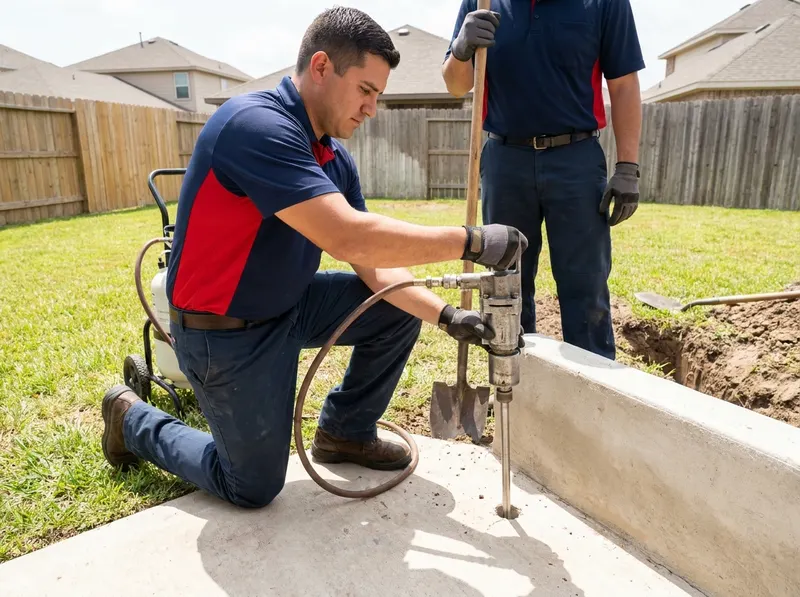
Termite treatment in Nueces County requires precise chemical barrier chemistry to withstand severe subtropical humidity, salt-spray exposure, and coastal water table shifts. In neighborhoods such as Flour Bluff, North Beach, and Bay Area, high ambient soil moisture accelerates termite activity while causing generic water-soluble treatments to wash out prematurely. A structural liquid treatment relies on non-repellent termiticides like fipronil bound directly to the soil particles surrounding a foundation. For homes resting on monolithic concrete slabs in Calallen, Lamar Park, and South Shores, liquid termiticides are injected through precise perimeter trenches dug 6 inches wide and 6 inches deep, creating a continuous zone that foraging worker termites cannot detect, leading to total colony transfer and structural relief.
Selecting between full-perimeter liquid soil barriers and localized monitoring-bait systems depends on foundation type, soil composition, and detected colony pressure. In low-elevation parcels bordering Cayo del Oso, Oso Bay Wetlands Preserve, or along coastal canals, saturated ground renders trenching alone insufficient during seasonal tidal shifts. In these high-moisture zones, installing tamper-resistant bait stations containing noviflumuron every 10 to 15 linear feet supplements the primary liquid defense by directly intercepting subterranean workers before they construct mud tubes against expansion joints. For properties in inland zones like Annaville and Kings Crossing with deep clay soils that contract during dry heat, high-pressure sub-slab injection seals subterranean access cracks without requiring homeowners to sign multi-year binding contracts.
1. Structural technicians perform an exhaustive inspection of all foundation perimeters, weep holes, crawlspaces, and interior drywall for mud tubes, exit holes, and hollowed wood members. 2. A continuous exterior perimeter trench measuring 6 inches wide by 6 inches deep is excavated around the entire foundation stem wall. 3. Non-repellent liquid termiticide is applied at a volume of 4 gallons per 10 linear feet per foot of depth, saturating the backfilled soil. 4. Exterior slab sections, porches, and attached garage aprons are drilled at 12-inch intervals to inject termiticide directly beneath horizontal concrete, after which holes are sealed flush with matching mortar.
Every job gets a firm, written price after a free on-site visit.
Tell us about your termite treatment job in Corpus Christ and we'll send a clear, written quote, usually the same day.
 Brenvexa Pest Solutions